Beyond Why
‹
Electric Charges
04 / 05

Why is charge quantized?

You might imagine charge working like water: keep adding a smaller and smaller amount until you have any value you want. Nature doesn't quite work that way.

Electric charge comes in discrete units:

q=neq = neq=ne

where nnn is an integer and

e=1.602×10⁻¹⁹ Ce = 1.602 \times 10^{-19}\,\mathrm{C}e=1.602×10⁻¹⁹
›
‹
›

More from Electric Charges

01

What is electric charge?

02

Why do opposite charges attract?

03

Can charge ever be created or destroyed?

04Reading

Why is charge quantized?

05

Why are electrons negatively charged?

One idea each

Electric Fields· 5 cards

01

What is an electric field?

Read →
02

How can a force exist in empty space?

Read →
C

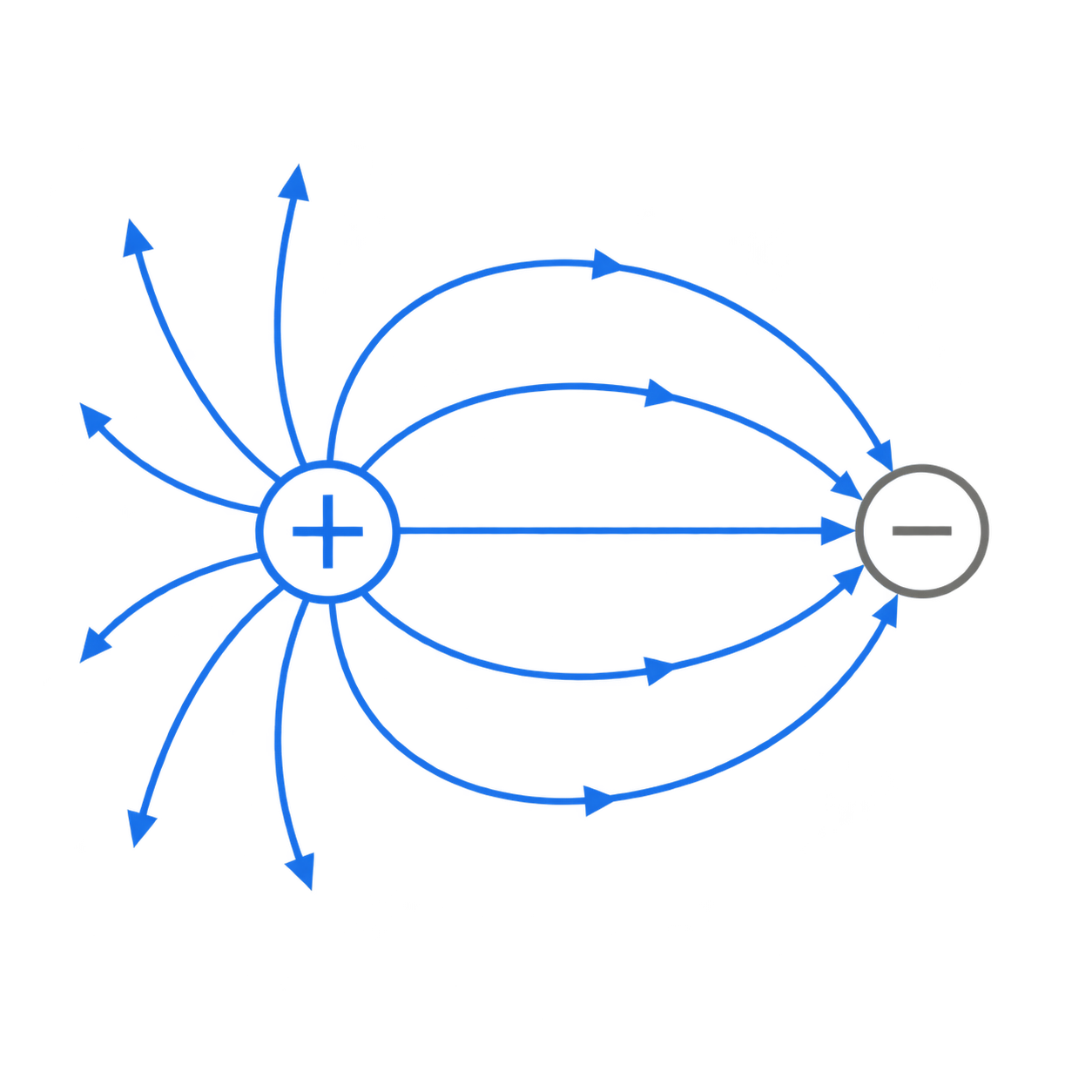
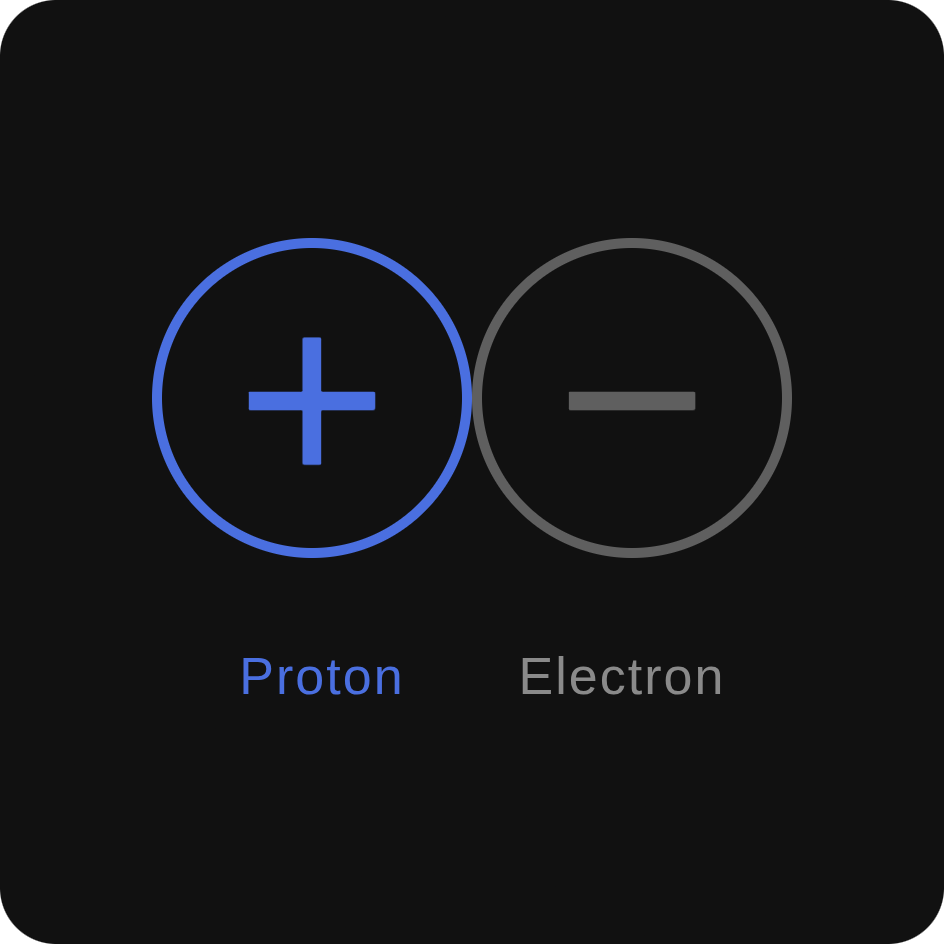
An electron carries (−e). A proton carries (+e).
Quarks complicate the picture: they carry charges of +23e+\frac{2}{3}e+32​e or −13e-\frac{1}{3}e−31​e. but they are confined inside composite particles and aren't observed as isolated charges.

Why does nature have these particular charge units? That's where the question stops being simple particle bookkeeping and reaches the quantum structure of the Standard Model.